




It Takes Two - Co-op Adventure Spotlight

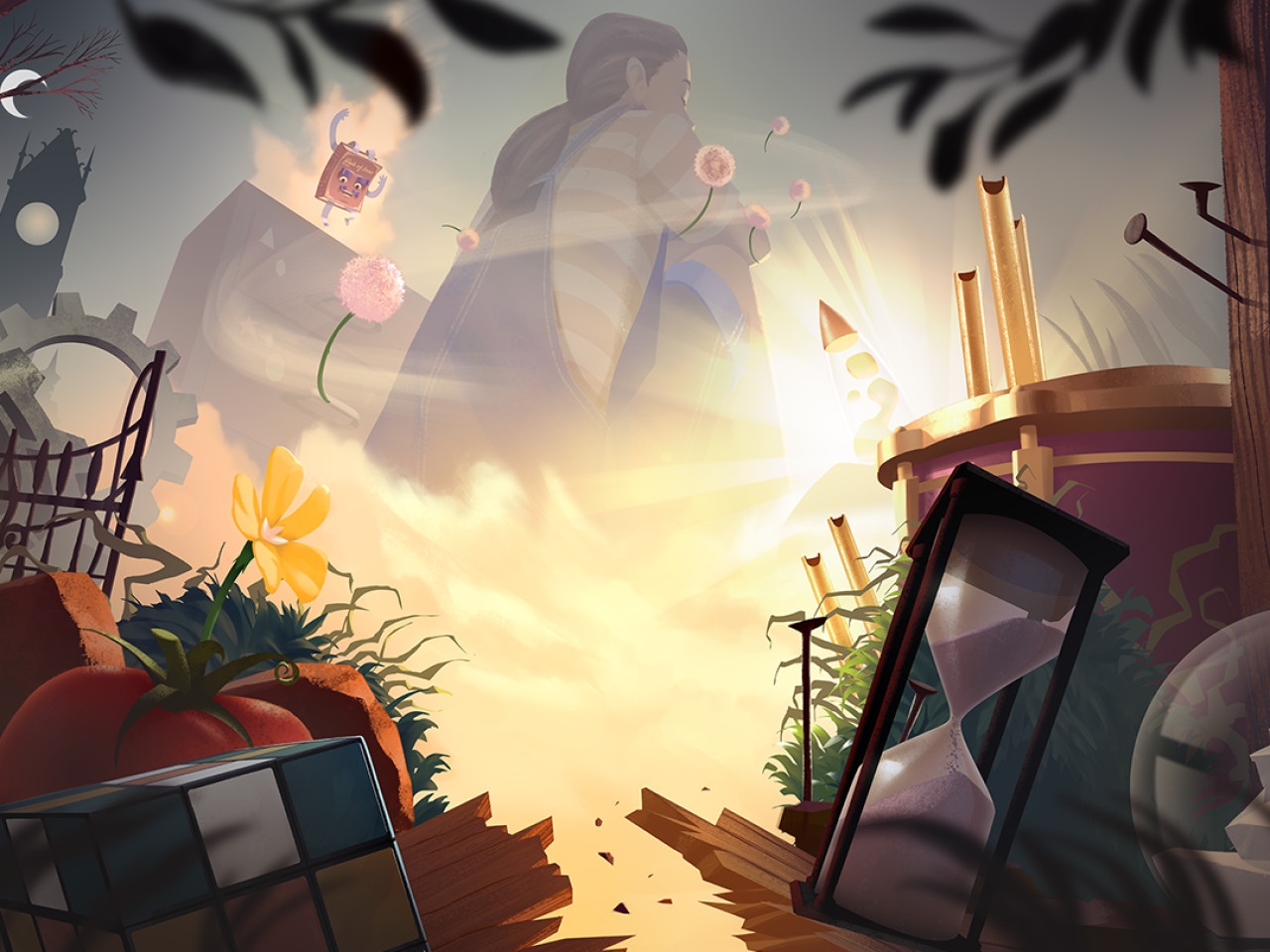
It Takes Two does not pretend one player can fake a second pair of hands. Hazelight Studios built a required co-op campaign about Cody and May, a couple already falling apart, then shrank them into dolls and made every puzzle, fight, and set-piece need two brains at once. Electronic Arts published the game on 26 March 2021. The Game Awards later named it Game of the Year. Those trophies matter less than the design bet: if one of you logs off, the story stops.
That is a rare catalog pitch. Most co-op games let you limp through with bots or skip the buddy system after the tutorial. It Takes Two treats partnership as the mechanic, not a mode toggle. You are not sharing a health bar. You are sharing a sentence that only makes sense when both of you finish it.
A campaign that cannot be soloed
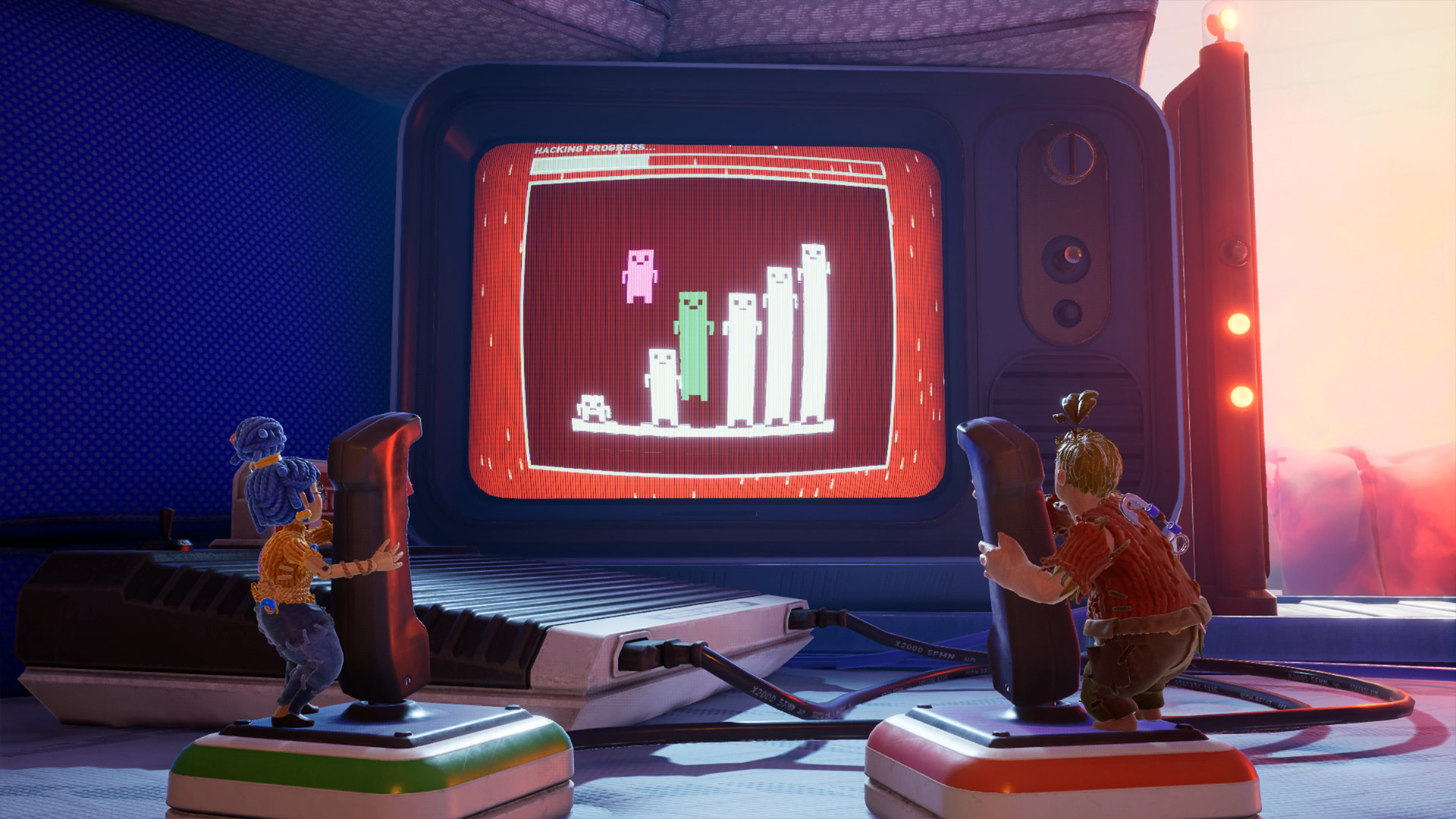
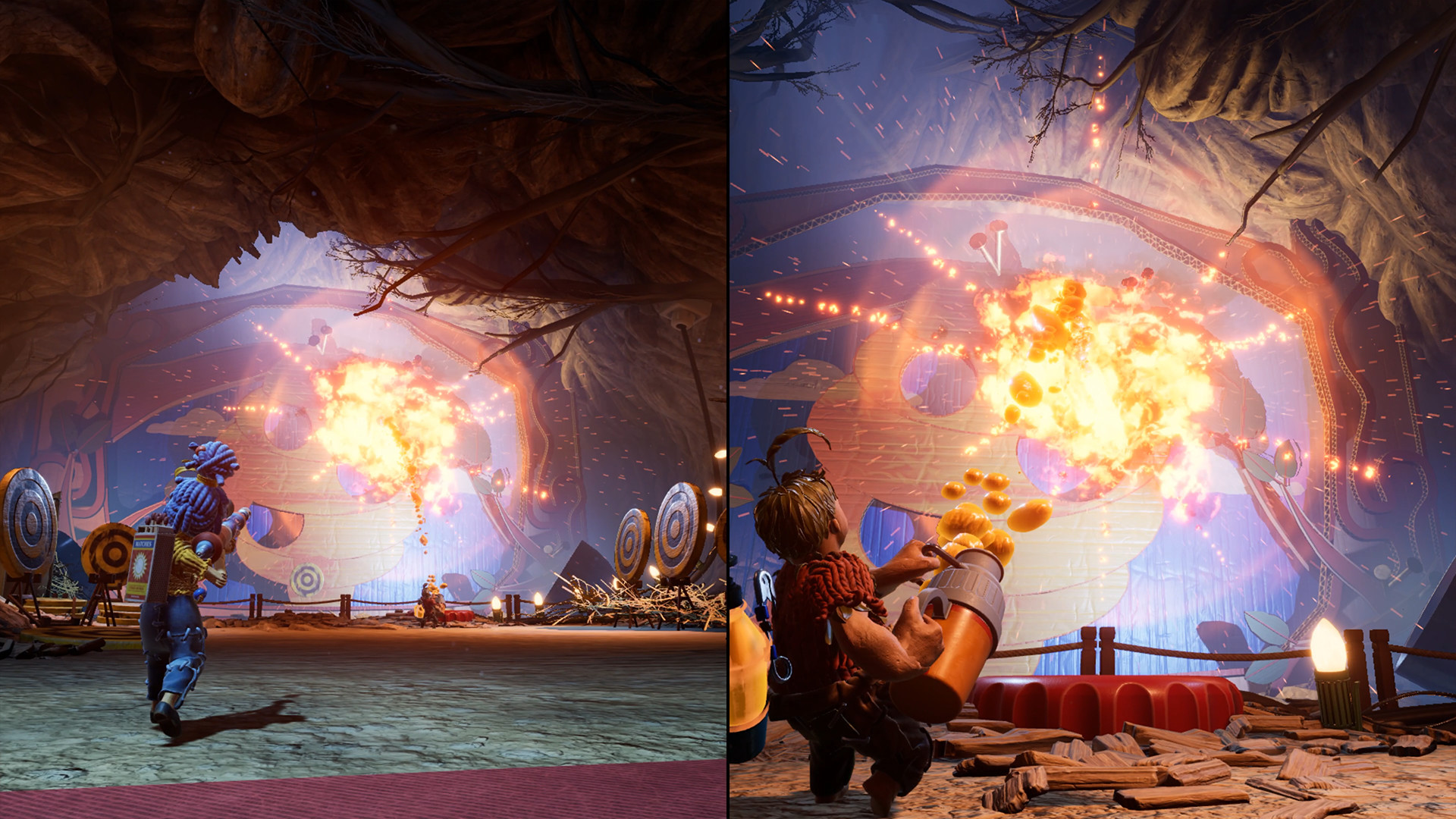
Josef Fares and Hazelight already tested forced co-op on A Way Out. It Takes Two is the louder, stranger, more generous version of that idea. One of you might be a nail gun. The other might be a magnet. Ten minutes later those tools are gone and you are piloting a paper airplane, a vacuum, or a pair of giant joysticks in front of a CRT that looks stolen from a 1980s arcade. The joke is visual. The discipline is mechanical: if your partner does not understand their toy, you both stall.
That same two-brain energy lives in Hazelight's later work. Split Fiction is the closest cousin in the catalog, another required-co-op campaign that keeps swapping fantasy and sci-fi mid-sentence. Play It Takes Two first if you want the marriage story. Play Split Fiction if you already know you like arguing over who holds the jump button.
Friend's Pass is the real pitch
Friend's Pass is the practical reason It Takes Two still sells. One person buys the game. A friend can play the full campaign without a second purchase. That is not a demo and it is not a weekend trial. It is the whole story, provided someone owns a copy. For couples, siblings, and friends who do not both want to spend money on the same night, that offer is the product.
Online and local both work. The game is at its best when you can hear the other person laugh, swear, or go silent after a failed jump. Voice chat is optional. Shared failure is not. If you want a looser sandbox after a tightly directed session, Palworld lets a group wander, build, and argue about chores instead of cutscenes. It is a different social contract. It Takes Two is a duet. Palworld is a clubhouse.
Levels that throw away the last toy
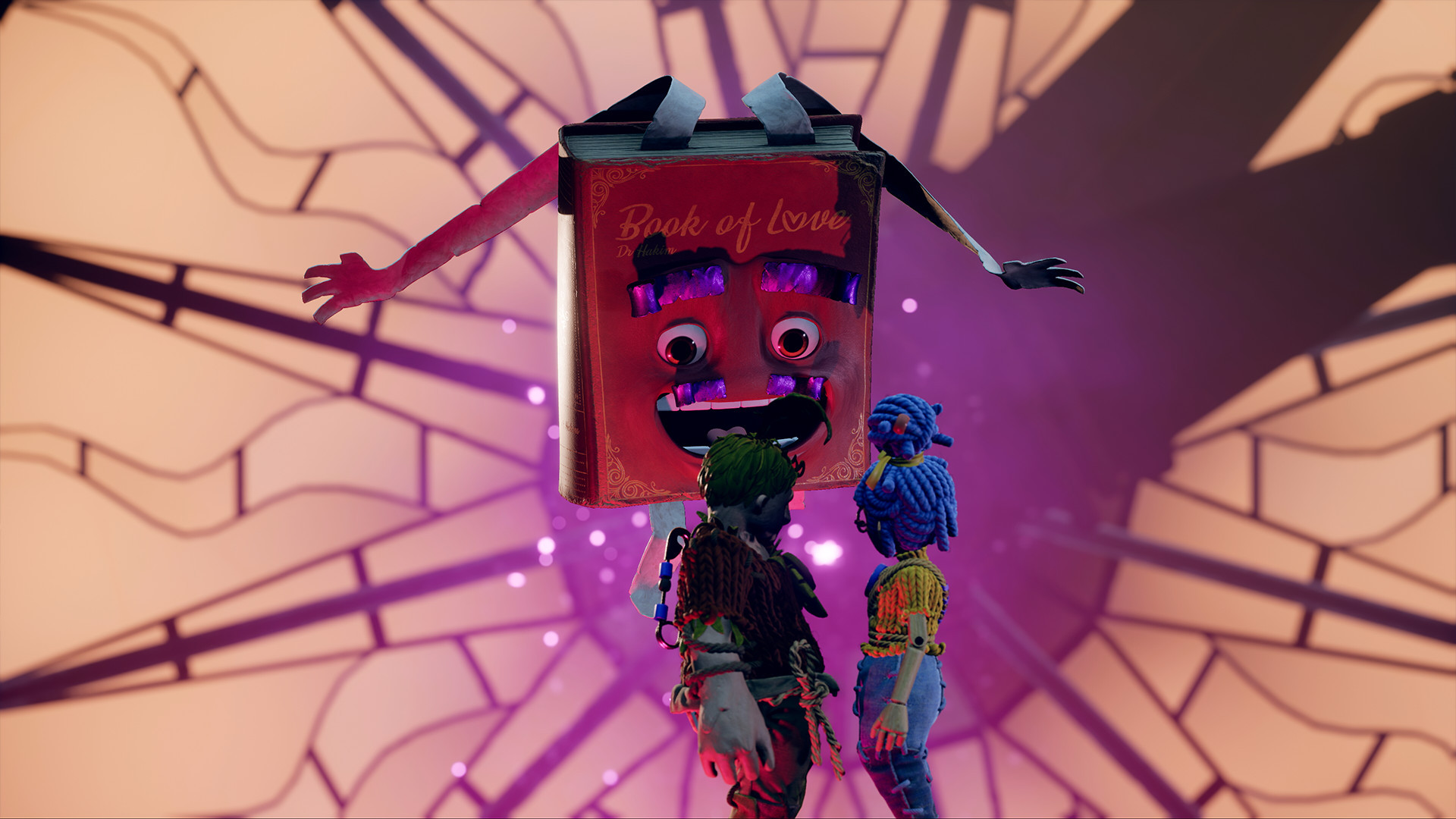
Hazelight's levels refuse to settle into a genre. A garden becomes a war. A workshop becomes a platformer. A music room becomes a rhythm fight. The Book of Love even shows up as a grinning narrator who will not leave the couple alone. The tone swings from slapstick to sincere without warning, which is why the campaign still feels handmade years later.
Platforming fans who want that physical comedy without a second player often land on Astro Bot, a single-player mascot game that still treats every room as a new toy. Speed-focused players who prefer open islands after the dollhouse can sprint through Sonic Frontiers. Neither replaces the co-op argument. They just prove that inventive movement still has a home in the store.
After the dolls go home
It Takes Two is not a live-service loop. You finish the story, you maybe replay a favorite chapter, and you put it down. That is a feature. The game is paced like a film you watch with someone, not like a battle pass you grind alone. Collectibles and minigames exist if you want extra time in a level, but the campaign is the product.
If you finish and still want kinetic single-player movement in a bigger city, Marvel's Spider-Man 2 is a clean contrast: two playable heroes, no requirement that a friend sit next to you. Use it as a palate cleanser. Do not expect the same conversational design. Spider-Man lets you swing in silence. It Takes Two will not.
Who should start the session
Buy It Takes Two if you have a person you actually want to play with for eight to twelve hours. It is a poor fit for solo collectors, for players who hate reading a partner's intent, and for anyone who needs competitive PvP to stay interested. Difficulty is mostly about communication. The jumps are fair. The arguments are optional but likely.
On PC a keyboard-and-mouse player can pair with a controller without the game collapsing. That flexibility matters more than spec sheets. The campaign is the reason to own it, not a graphics slider. When you want that Hazelight duet in your library, It Takes Two on Urazon is a straightforward way to start Friend's Pass without hunting noisy marketplace listings.